
Roller Press JD
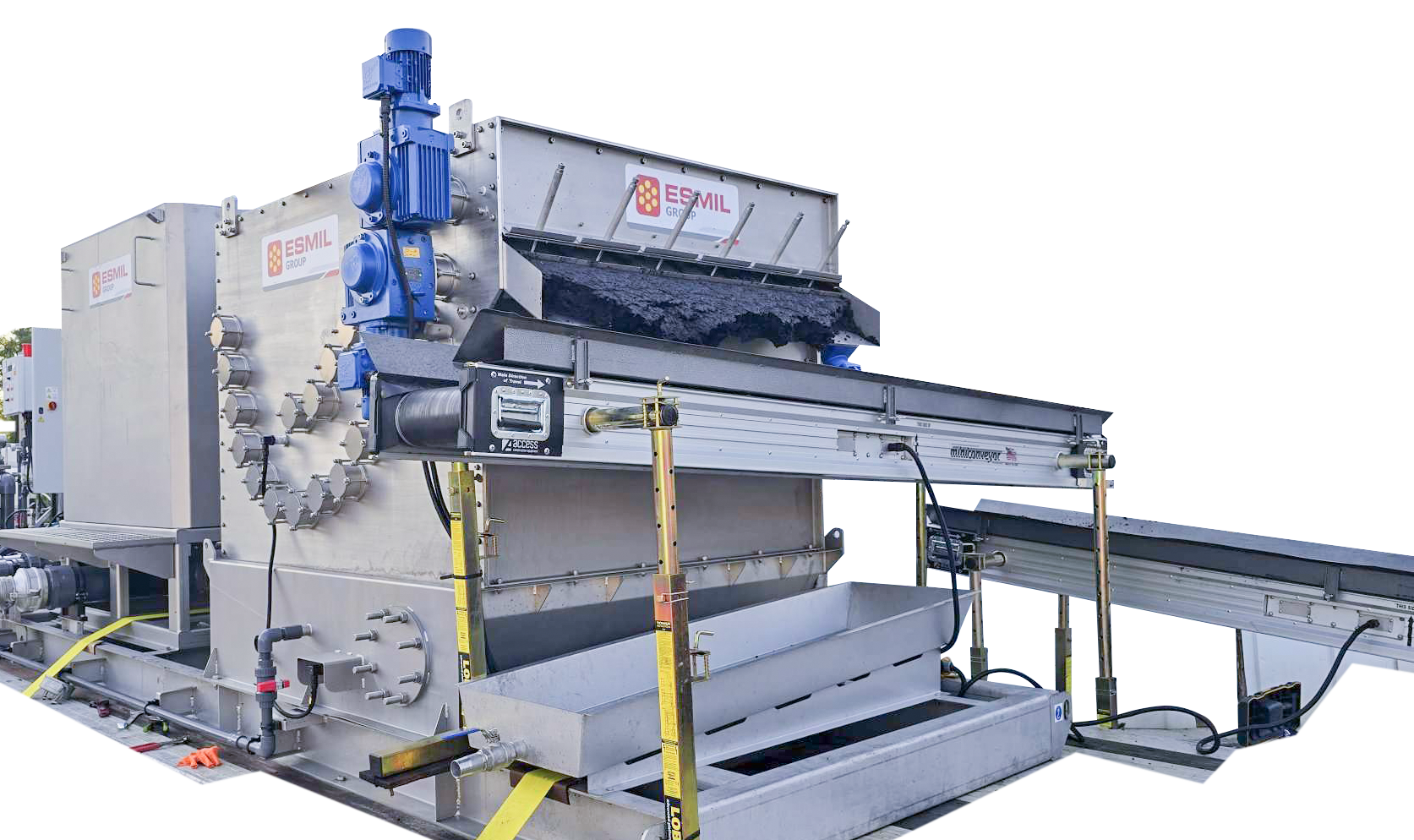
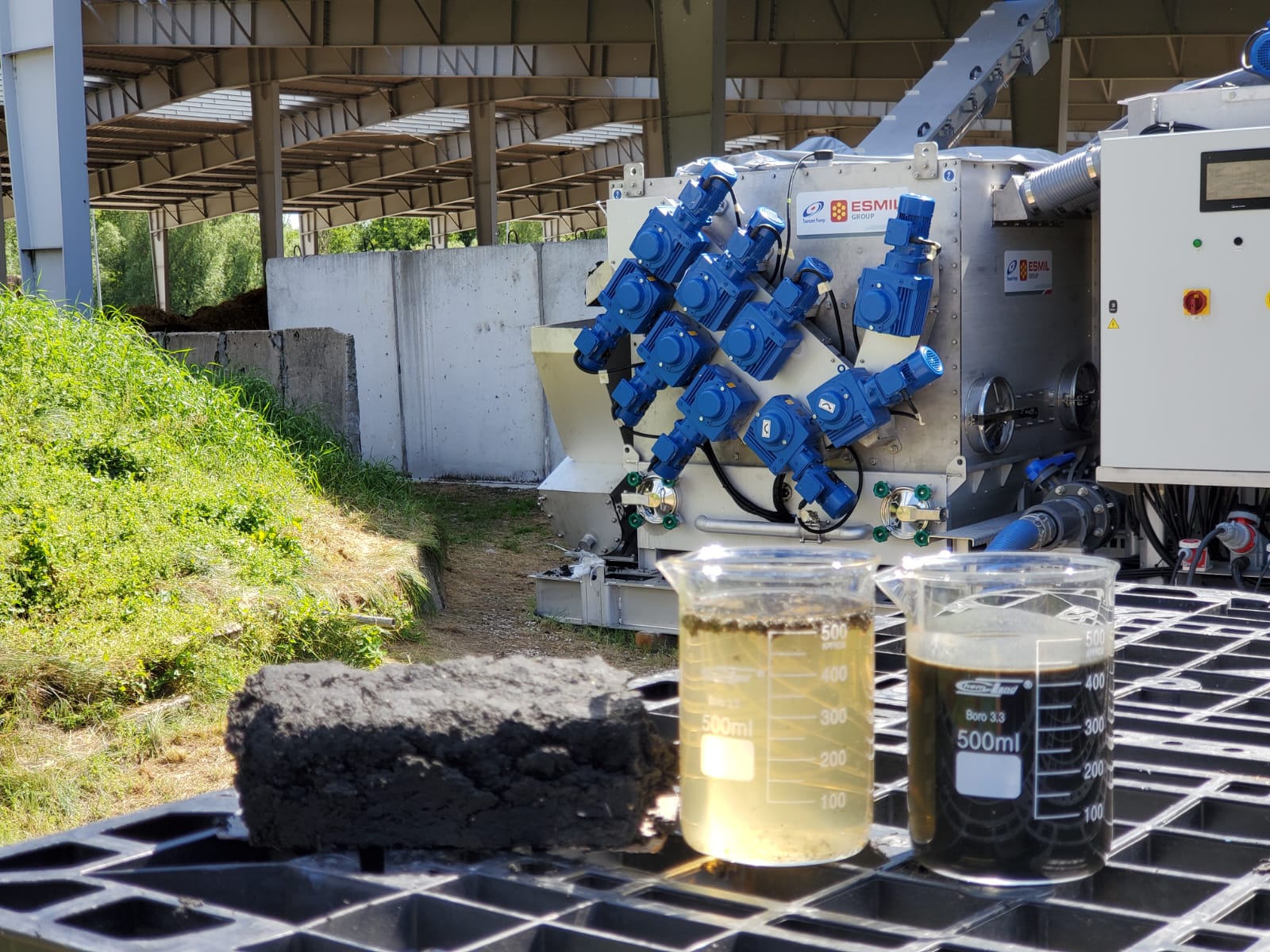
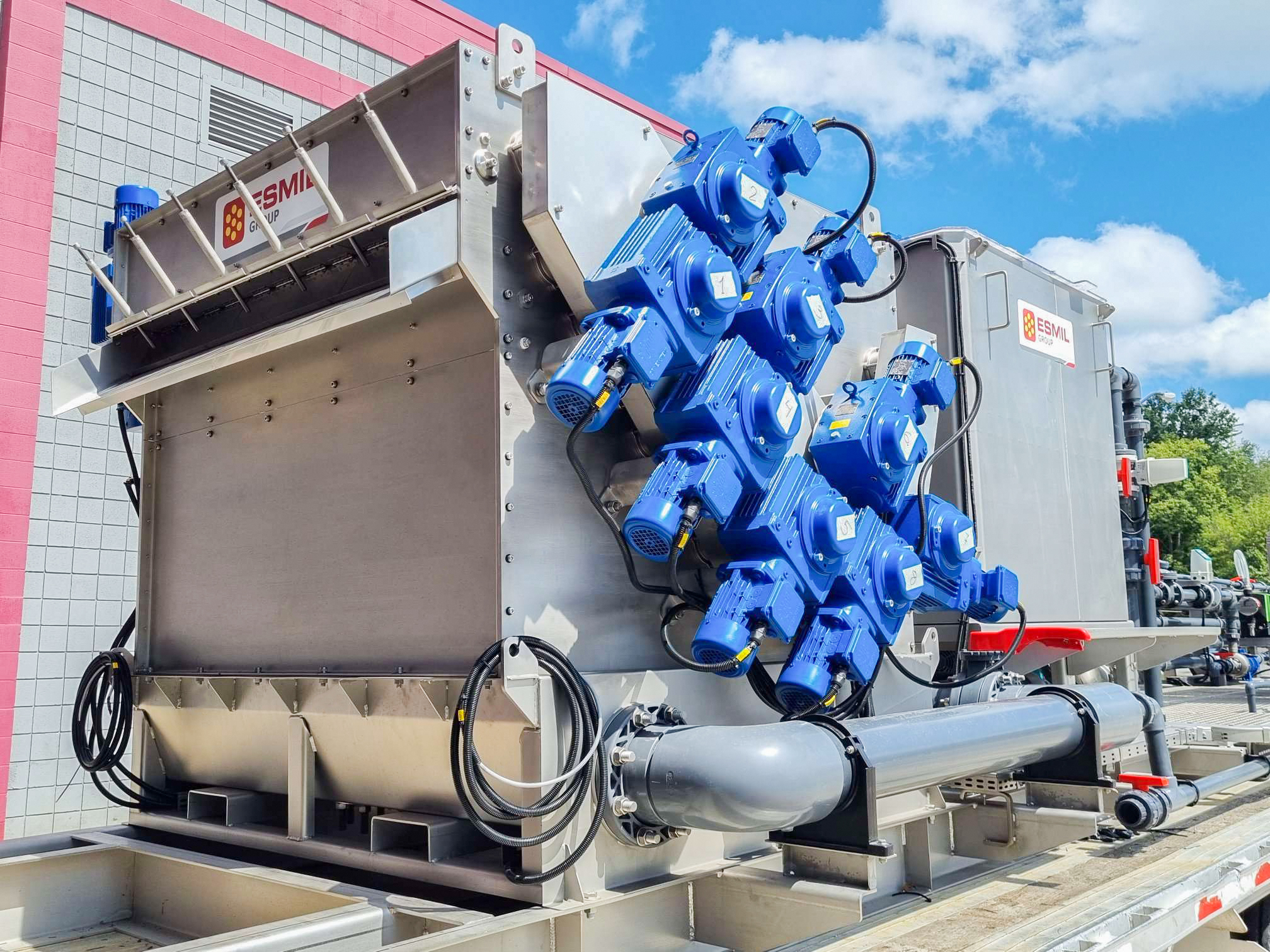
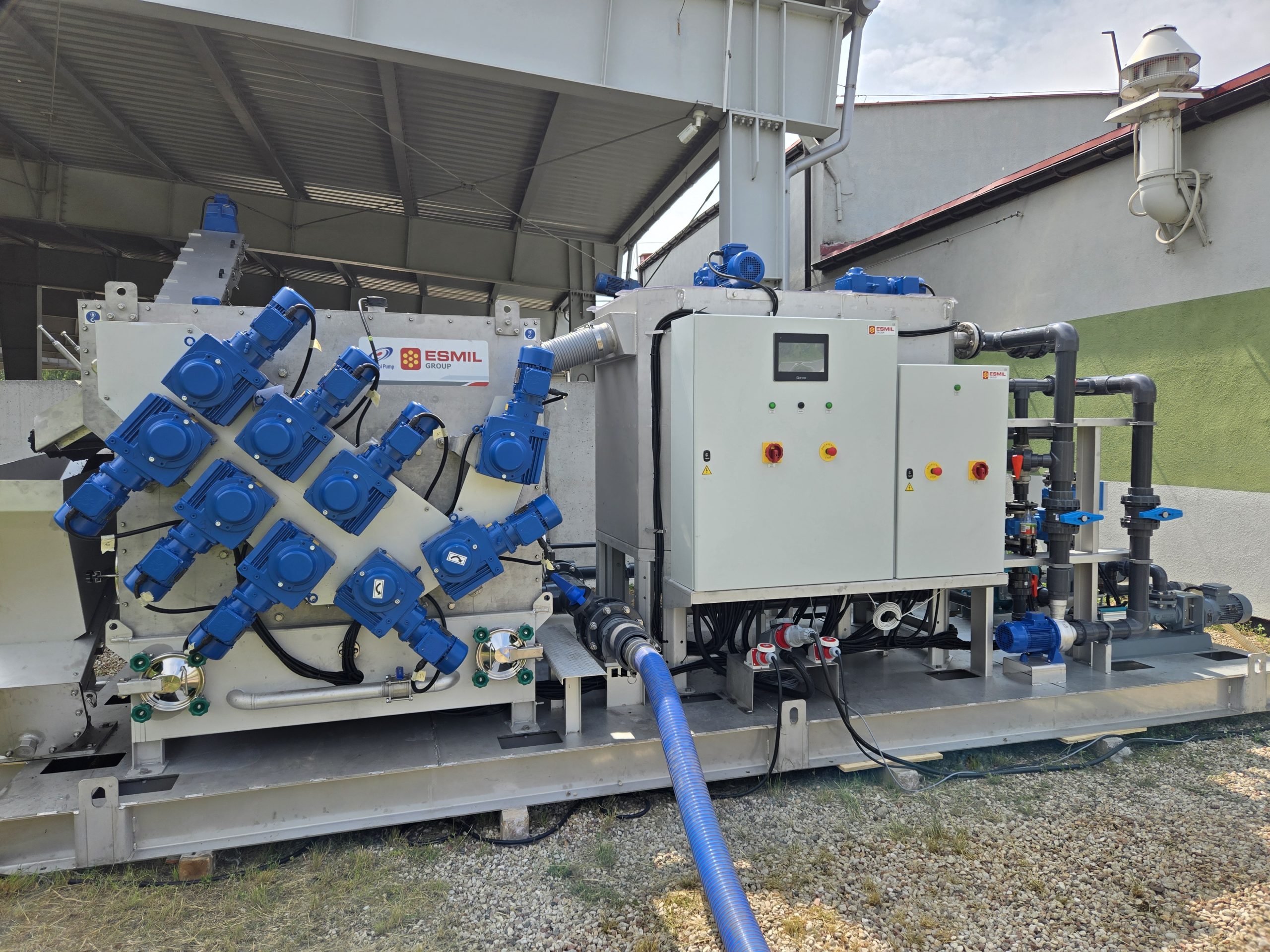
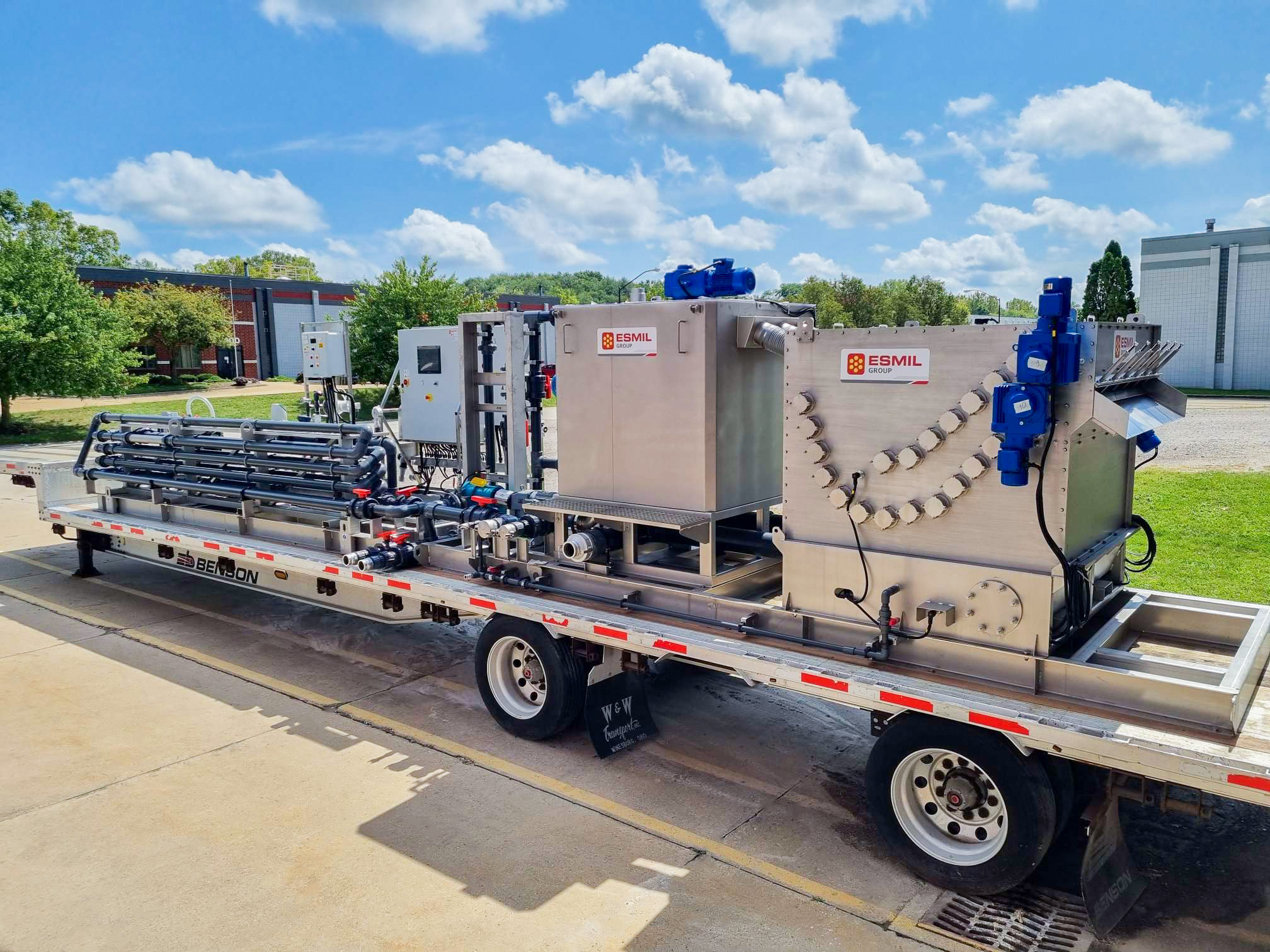


Discover the Roller Press JD: Your Ultimate Dewatering Solution for Abrasive and Fibrous Sludge
Ready to Take the Next Step in Optimizing Your Wastewater Treatment Process?
Download Our Questionnaire Now and Let’s Get Started!
The Esmil-Tsurumi JD Roller Press is designed for efficient dewatering of sludge with high mineral content and abrasive properties. The unit is used across a wide range of applications, including municipal wastewater treatment plants as well as industrial, agricultural and food processing facilities.
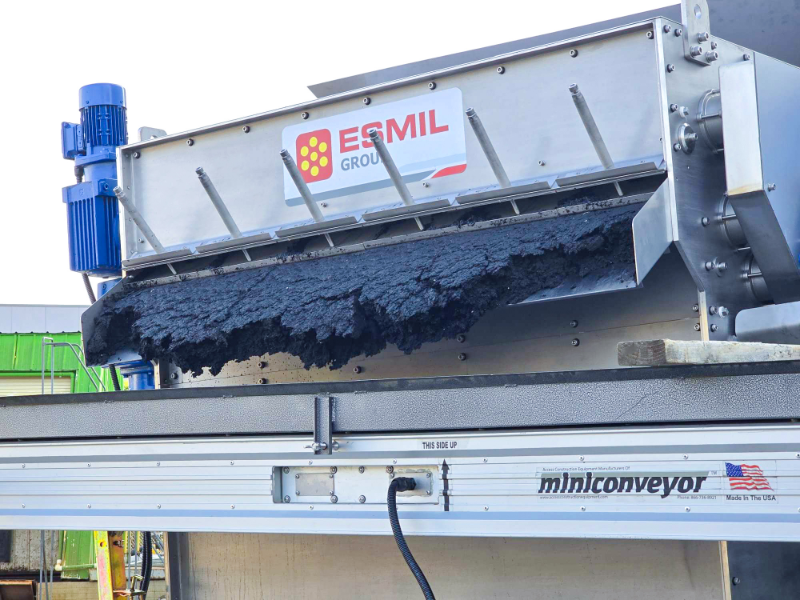
The press efficiently handles feed sludge concentrations of 0.5–5%, producing cake dryness of up to 50%, depending on sludge water release characteristics. Thanks to its robust design, the JD dewatering unit is particularly suitable for sludge containing 40–60% mineral content, where many conventional sludge dewatering technologies struggle to maintain stable and reliable operation.
Sludge Dewatering Applications for the JD Roller Press
The JD Roller Press is designed for efficient dewatering of sludge in a wide range of municipal and industrial applications.
- Small and medium-sized municipal wastewater treatment plants (up to 27 MGD)
- Food processing industry (dairy, meat, fish, brewing and others)
- Biogas and anaerobic digestion plants
- Textile and tannery industries
- Cosmetics and pharmaceutical industries
- Semiconductor and automotive industries
- Pulp, paper and woodworking industries
- Livestock and agricultural waste processing facilities
- Drinking water treatment plants
- Other industries generating sludge with high mineral content
Key Advantages of the JD Sludge Dewatering Press
The JD Roller Press sludge dewatering technology combines robust mechanical design with advanced process features, ensuring reliable dewatering of sludge with high mineral and abrasive content.
Process Performance
- Reliable Dewatering of Difficult Sludge Types – The JD sludge dewatering press efficiently handles a wide range of sludge types, including sludge with high mineral content, abrasive particles, fibers, fats, oils and petroleum products, as well as sludge with low organic content.
- Stable Operation with Debris and Fibrous Sludge – Reverse operation mode and optimized spacing between the upper and lower rollers allow reliable dewatering of sludge containing fibers and large inclusions without clogging or jamming.
- Self-Cleaning Roller Design – Self-cleaning rollers prevent clogging and eliminate the need for water flushing, reducing downtime and maintaining stable sludge dewatering performance.
- Integrated Sludge Conditioning – Built-in flocculation system supports effective conditioning before sludge dewatering, eliminating the need for additional equipment or tanks.
Operational Efficiency
- Low Energy Consumption – The JD sludge dewatering press requires significantly lower energy consumption compared with many conventional sludge dewatering systems.
- Low Operating and Capital Costs – The compact and enclosed design reduces installation space requirements, while lowering operating and infrastructure costs.
Durability and Long Service Life
- Corrosion-Resistant Construction – The JD roller press body is manufactured from AISI 304 or AISI 316 stainless steel and protected by advanced anti-corrosion treatment, including volume pickling and passivation, ensuring long-term resistance to aggressive environments.
- Wear-Resistant Components – Disks made from epoxy-based wear-resistant plastic and stainless steel, combined with extra-strong stainless steel shafts, ensure durability and extended service life.
- Low Roller Rotation Speed – Roller speed of up to 1.5 rpm minimizes mechanical wear while ensuring quiet, vibration-free operation.
Operation and Maintenance
- Simple Operation and Maintenance – The JD sludge dewatering unit is designed for straightforward day-to-day operation, while routine maintenance can be performed by plant personnel without specialized training.
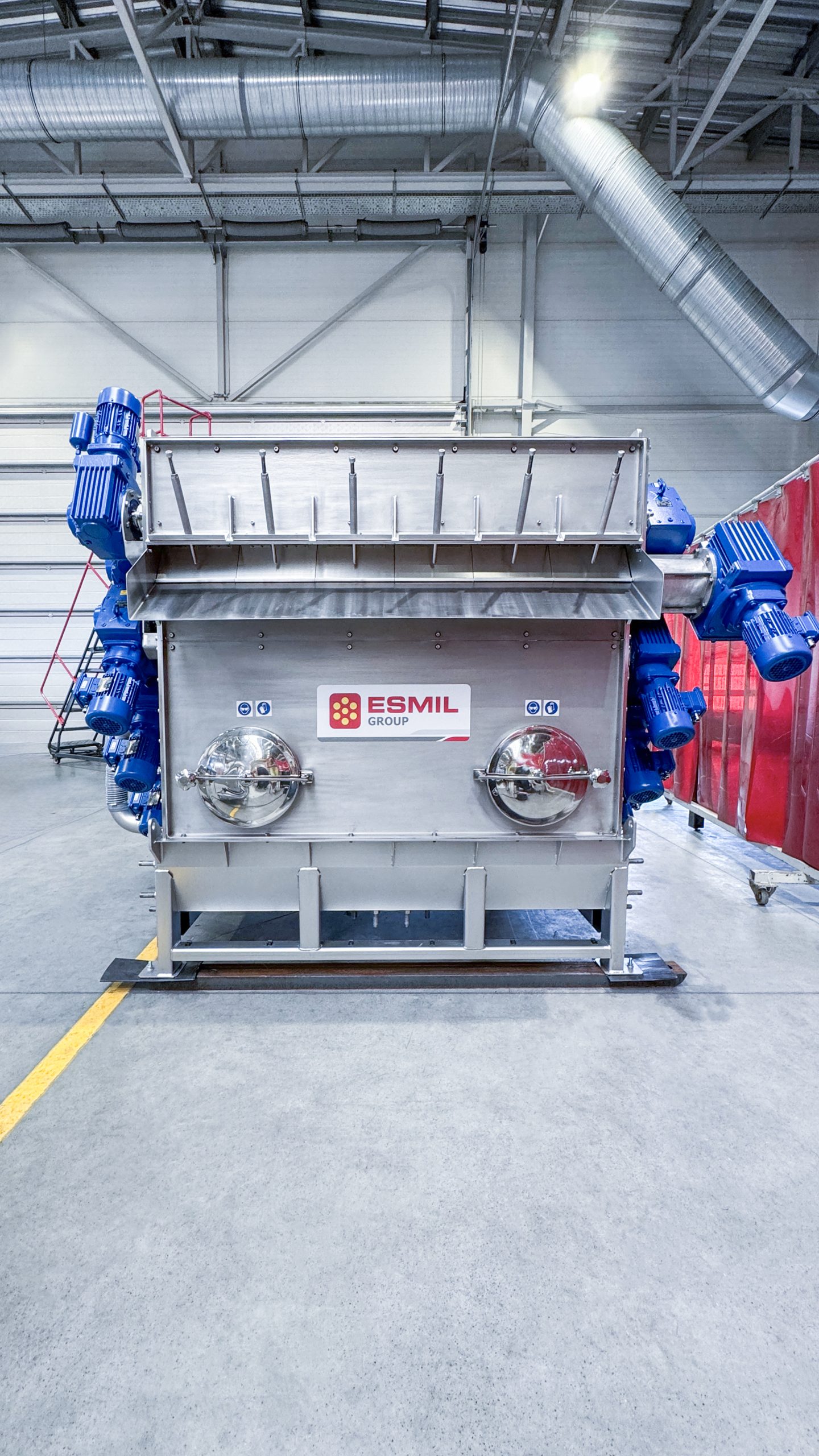
- Easy Maintenance Access – Key components are easily accessible, while quick-release covers and simplified drive maintenance reduce service time.
Automation and System Control
- Advanced Automation – Multiple operating modes and control algorithms allow synchronization with other wastewater treatment equipment.
- Electrical Protection Systems – Integrated protection against electrical overload and power surges ensures safe and reliable operation.

Sludge Dewatering Roller Press JD Design
The JD roller press is designed for maximum durability and reliable operation in demanding conditions. Its construction is specifically adapted to handle difficult sludge with high mineral content, which often poses challenges for many conventional sludge processing equipment.
The dewatering process combines gravity filtration and compression dewatering, ensuring efficient separation of water from sludge across different process stages.

JD Sludge Dewatering Press – Filtering Rollers Design
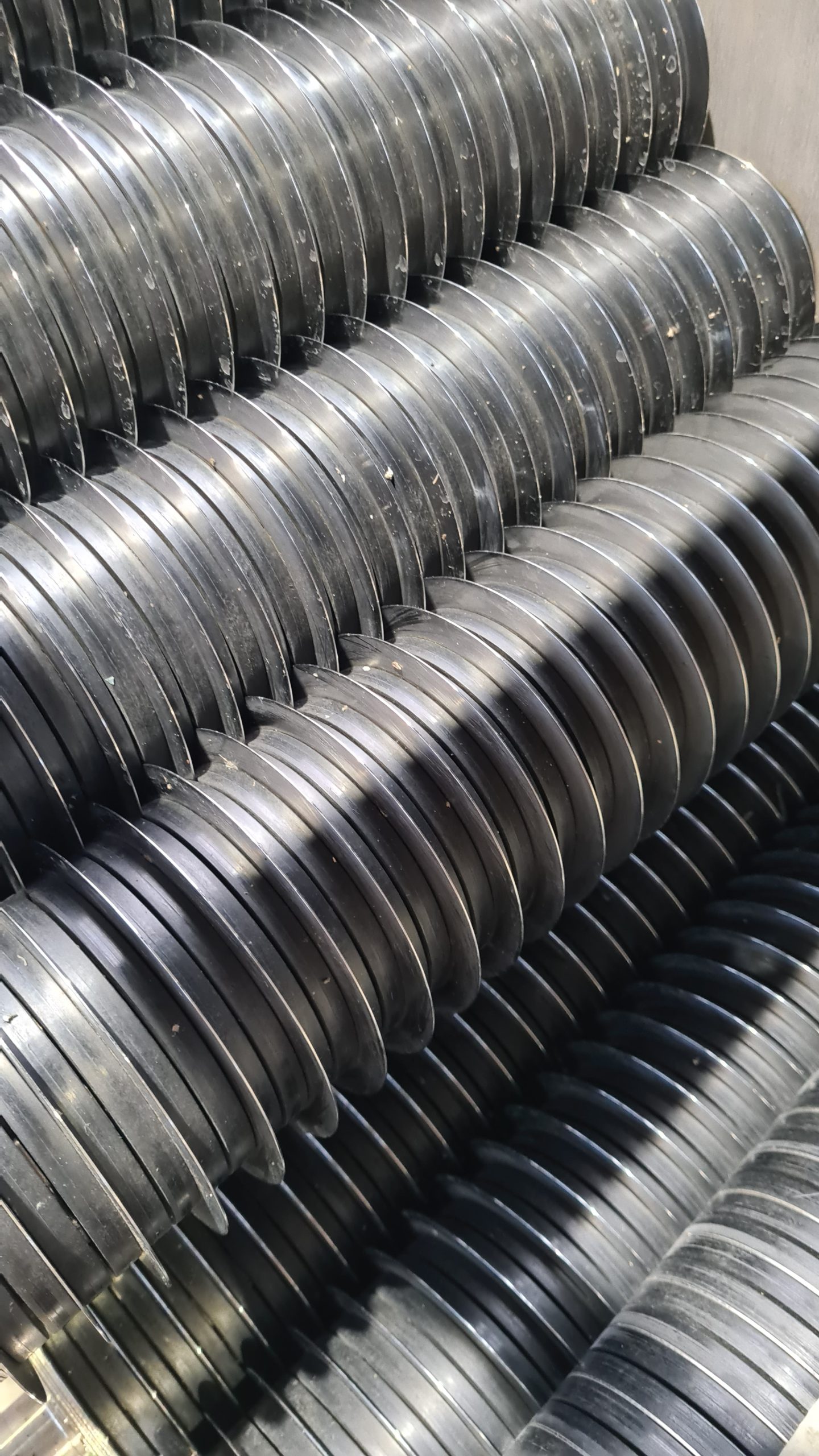
The main dewatering unit consists of two rows of rollers that transport sludge from the inlet section to the high-pressure dewatering zone. The filtration rollers are built from alternating thin stainless steel disks and epoxy-based disks, creating a robust and wear-resistant structure suitable for abrasive sludge.
- The rotation speed of the rollers can be adjusted separately for the filtration and dewatering zones, allowing precise control of the sludge dewatering process.
- The low rotational speed of the rollers ensures minimal wear of key components, contributing to long service life and stable operation.
- The distance between the upper and lower rows of filtration rollers is at least 1.18″, allowing processing of sludge with large and fibrous inclusions without clogging the dewatering unit.
- The self-cleaning roller design prevents clogging and reduces the risk of downtime associated with cleaning, ensuring continuous dewatering of sludge.

Drive System Diagram of the JD Roller Press
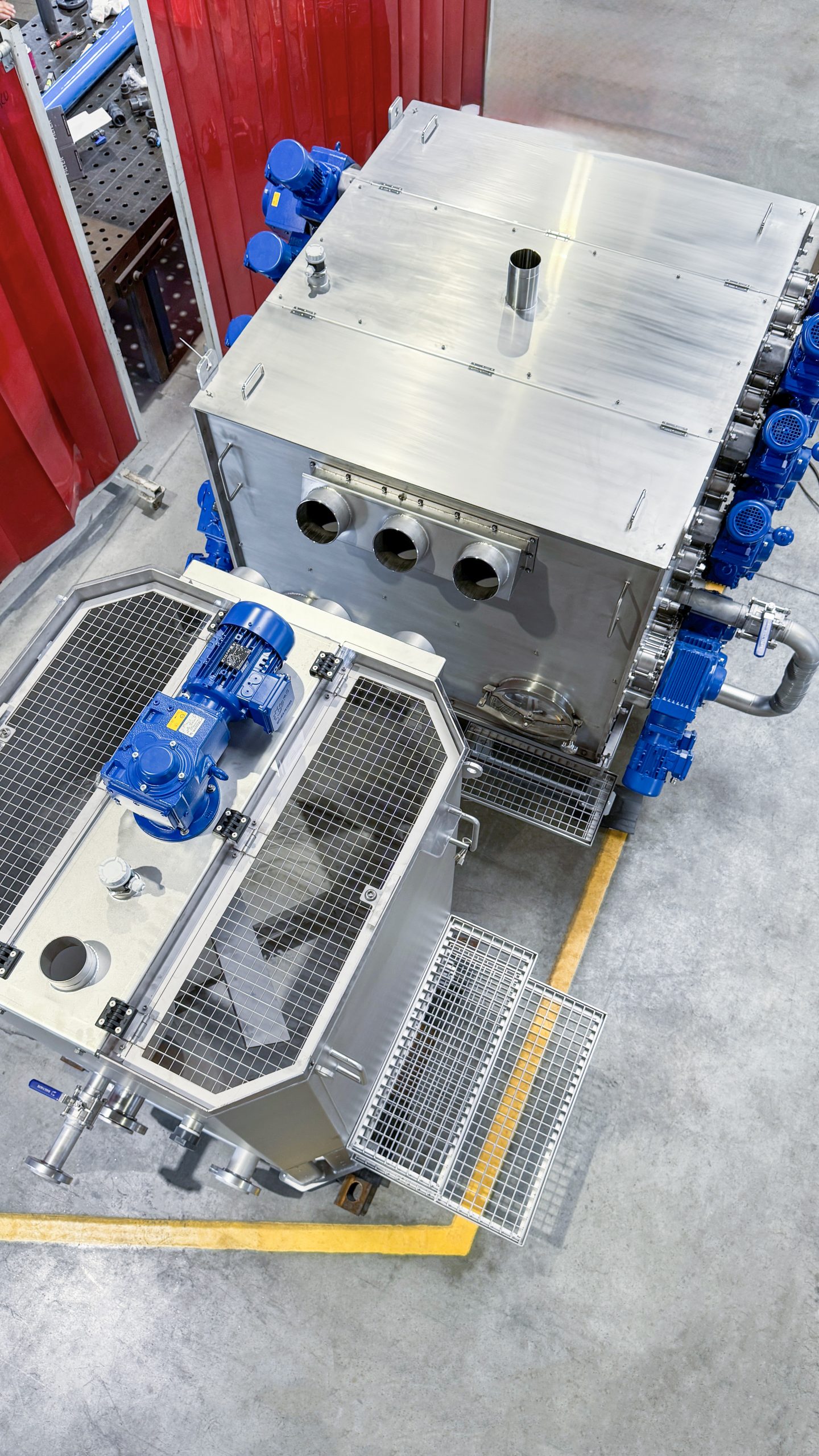
The JD roller press is equipped with 7 to 10 gear motors, installed in both the filtration and dewatering sections. Each motor drives two shafts, ensuring stable and synchronized operation of the entire sludge dewatering unit.
- The system allows adjustment of the rotation speed ratio between the filtration and dewatering sections, enabling optimization of the sludge dewatering process depending on sludge characteristics.
- The total installed power of the main dewatering unit drives is only 1 to 5 Hp, resulting in very low energy consumption compared to conventional sludge dewatering technologies.

Optimized Flocculation Process
The JD sludge dewatering machine is equipped with an integrated sludge conditioning system (flocculation), eliminating the need for additional equipment or tanks for sludge preparation. This simplifies installation, reduces footprint and lowers both investment and operating costs.
- To preserve optimal floc structure and integrity, the conditioned sludge is fed to the dewatering section by gravity, avoiding floc breakage that may occur during pumping.
- Easy and direct access to the flocculation tank allows continuous monitoring of the process, enabling operators to observe mixing performance and assess reagent dosing efficiency in real time.
The system supports both single- and two-reagent conditioning (flocculation with optional coagulation), depending on sludge characteristics and process requirements. It also allows the use of both rapid and slow mixing, ensuring optimal floc formation and stable sludge dewatering performance.
JD Roller Press – Reliable Sludge Dewatering Equipment
The JD roller press combines robust mechanical design with advanced process solutions to ensure efficient and stable dewatering of wastewater treatment sludge in demanding applications. Compared to conventional sludge dewatering systems, it delivers reliable performance when handling high-mineral and abrasive sludge, while maintaining low energy consumption and minimal wear of key components.
As a versatile sludge dewatering solution, it supports continuous operation, optimized flocculation and precise process control across a wide range of municipal and industrial applications.
Technical Specification of JD Roller Press
| Productivity on dry solids, lbSD/h | up to 1200 |
| Hydraulic capacity, gpm | up to 240 |
| Installed power, hp | 1.1- 8.0 |
| Nominal roller width, in | 10, 20, 30, 40, 60, 80 |
| Number of rollers, pcs. | 14 - 22 |
| Rollers rotation speed, rpm | up to 1.5 |
How do I choose between JD Roller Press and MDQ Multi-Disk Screw Press?
a) Opt for JD Roller Press when you need to dewater sludge with a high mineral content (inorganic content up to 60%).
b) Choose the JD Roller Press when dealing with sediment containing relatively large solid, abrasive, or fibrous inclusions (such as straw, fibers, particles of animal origin, etc.), and when working with high-fat concentration sludge.
How frequently should I replace the rollers in these dehydrators?
Roller discs should be replaced as they wear out over time. Typically, critical wear of the discs occurs after 5 to 7 years of operation. The replacement process can be carried out without involving the manufacturer’s representatives, simplifying maintenance.
Do JD Roller Presses require a lot of space for installation and operation?
No, these presses do not demand extensive space or high capital costs for installation and operation. They can be conveniently installed in various settings, including containerized wastewater treatment plants and mobile units, offering flexibility in accommodating different facility configurations.


